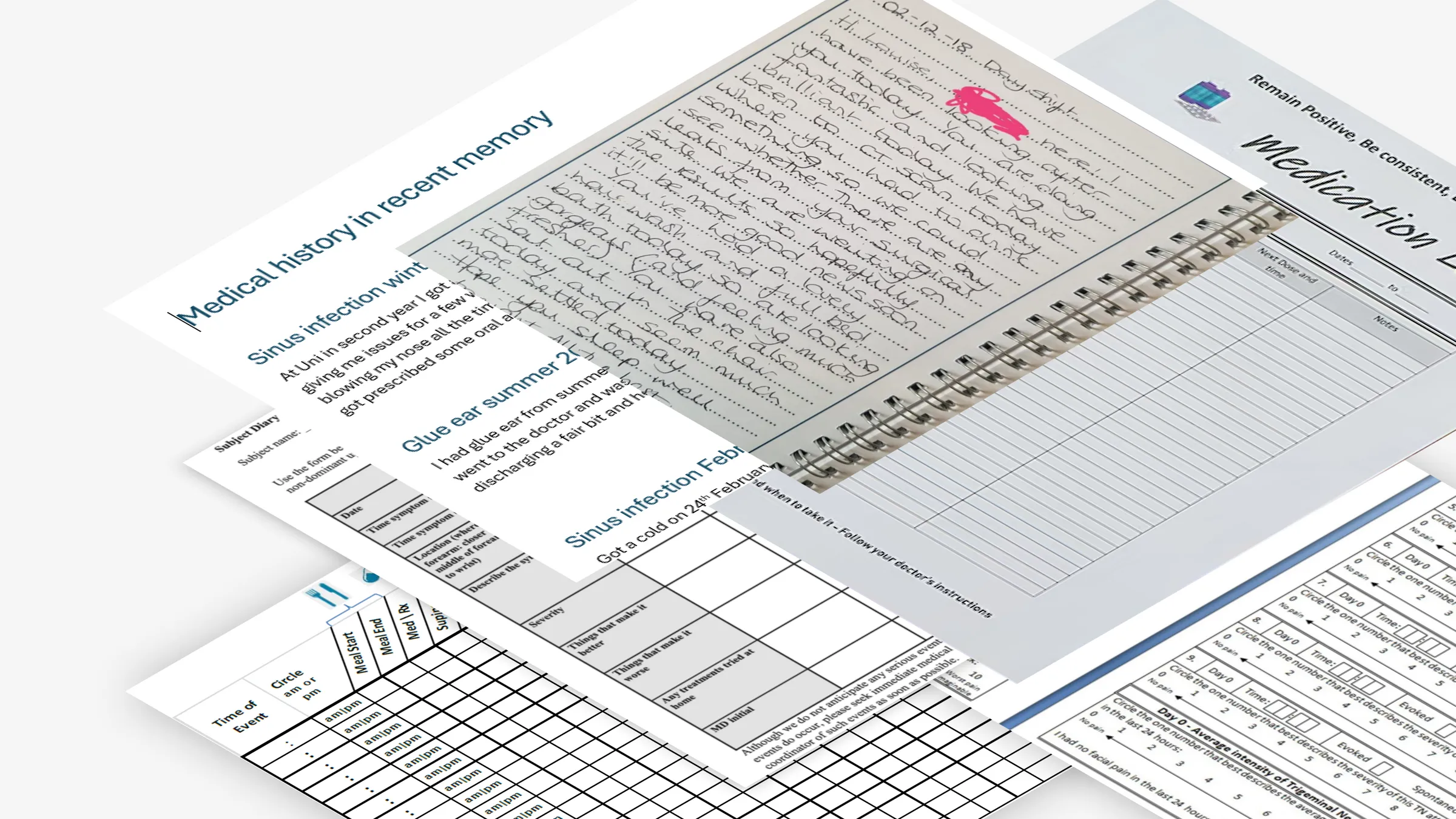
The short answer: a symptom diary is a running record of how you feel. For each entry, note when it happened, what it was, how bad it was (0 to 10), what made it better or worse, and how it affected your day. Write it close to the moment, keep it short, and bring a summary to appointments.
A good diary turns "I've been feeling rough" into something you and your doctor can work with.
What a symptom diary is for
It shows patterns you'd miss day to day. It helps you spot triggers, see how often something really happens, and tell whether a new treatment is helping. NHS guidance for people with long-term conditions recommends noting when symptoms happen, how severe they are and how they make you feel.
What to record
You don't need every field every time.
| What to note | Example |
|---|---|
| When | Tuesday, around 2pm |
| What happened | Headache after lunch |
| Where and what it felt like | Throbbing, behind my right eye |
| How bad (0 to 10) | 7 at its worst |
| Better or worse with | Worse at my screen, better in a dark room |
| Medication | Ibuprofen at 2.30pm, didn't help much |
| Effect on your day | Left work early |
Short on energy? One sentence still counts: "My headache got worse after lunch. I had to leave work early." That holds the timing, severity and impact.
Write it close to the moment
This matters more than it seems. In a study published in the BMJ, people with chronic pain kept a paper diary three times a day for three weeks. Their diary cards suggested they'd filled it in on time 90% of the time. The binders secretly recorded when they were opened, and showed the real figure was 11%. An electronic diary that time-stamped entries was completed on time 94% of the time.
The lesson isn't that people are careless. Keeping a diary on schedule is hard, and memory fills the gaps. To make it easier:
- Keep it on your phone or somewhere you'll see it
- Record a voice note if typing feels like too much
- Write something every day, even "steady day, nothing new"
Using it at an appointment
Your GP won't have time to read weeks of entries. Pull out:
- The main pattern. "Headaches 3 or 4 days a week for a month."
- The worst moments. "Two afternoons I had to leave work."
- What you've noticed. "Worse after poor sleep."
- Your question. "Is there anything else I could try?"
For more on this, see our guide to preparing for a GP appointment.
Free symptom diary template
Copy this into a notebook or notes app. One row per entry.
| When | What happened | Where | What it felt like | 0 to 10 | Better or worse with | Medication | Effect on my day |
|---|---|---|---|---|---|---|---|
Before an appointment, add a quick summary: best day, hardest day, anything new, and questions for your doctor.
Where Yarn fits
For some people, the effort of keeping a diary is exactly what makes them stop. We built Yarn to make recording feel more like talking than form-filling.
Yarn is a health diary for people living with long-term conditions. You tell it how you feel in your own words, with a voice note or a few typed lines, and it asks gentle follow-up questions, like when it started or what made it worse. Entries come together in a timeline, and before an appointment Yarn helps you prepare a summary and your questions.
Yarn uses AI to help organise what you record. It doesn't diagnose conditions or give medical advice, and you review your summary before sharing it.
Explore the demo, no account needed. Yarn is coming to iOS and Android in November 2026. Join the waitlist to hear when it's ready.
If your symptoms are severe, sudden or getting worse quickly, don't wait for a routine appointment. Use NHS 111, or call 999 in an emergency.
About Yarn. Yarn is a health diary that helps people living with long-term conditions record their health in their own words, revisit their entries and prepare for appointments. It was started by five design engineers who met at Imperial College London and is built with people managing long-term conditions and the clinicians who care for them. Yarn does not diagnose conditions or replace medical advice.
Frequently asked questions
What should I write in a symptom diary?
The date and time, what happened, where you felt it, what it felt like, how bad it was from 0 to 10, what made it better or worse, any medication, and how it affected your day.
How often should I fill in a symptom diary?
As close to the moment as you can. A quick note at the time is more accurate than a long entry written days later.
Is a symptom diary app better than paper?
Either can work. What matters is recording close to the moment. A BMJ study found many paper diary entries were filled in later from memory, while an electronic diary that time-stamped entries was completed on time far more often.
What is Yarn?
Yarn is a health diary for people living with long-term conditions. You record how you feel in your own words, by voice note or a few typed lines, look back over your entries, and prepare a summary before appointments. Yarn does not diagnose conditions or give medical advice.
Sources
This article is for informational purposes only and does not constitute medical advice, diagnosis, or treatment. Always consult your GP or another qualified healthcare professional with any questions about your health or symptoms.
← All postsMore from Yarn
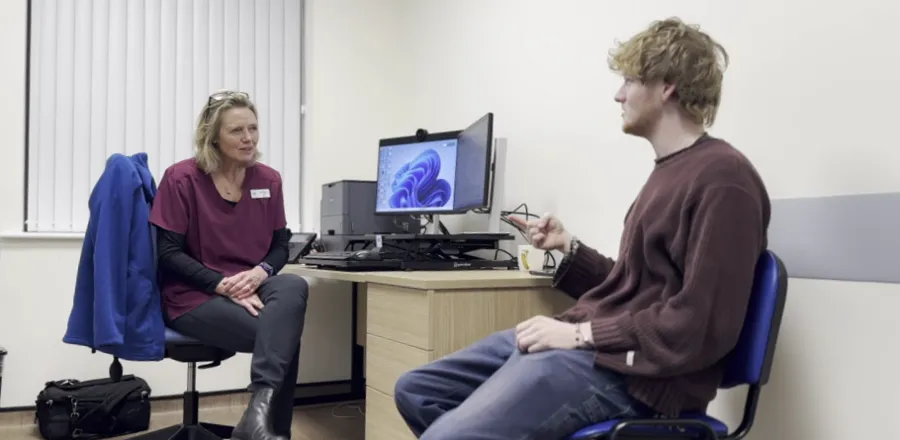
How to describe pain to your doctor: the SOCRATES method explained
Doctors use the SOCRATES framework to understand pain. Here's what each letter means, and how to use it to describe your own pain clearly.
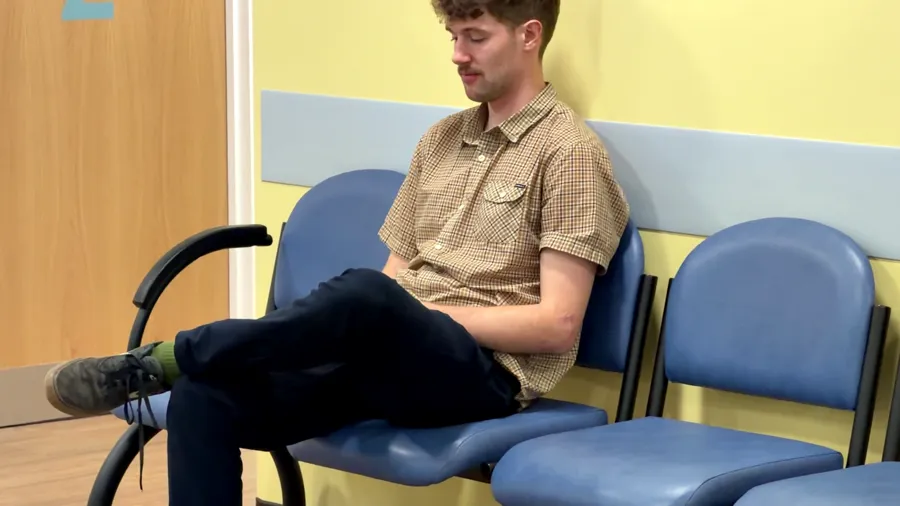
How to prepare for a GP appointment (and make 10 minutes count)
A simple way to prepare for a GP appointment when you live with a long-term condition: what to note down, what to ask, and what to bring.